
Ten years (more) have passed since the sensational announcement between Mitsubishi Heavy Industries and Ryobi Limited of a unique partnership, which led to the merging of their offset machinery resources under a new name: 
Let's retrace the steps of this process and what the future holds for the constantly shrinking offset segment.
Mitsubishi's origins date back to 1870, with founder Tsukumo Shokai. The early years focused on the naval industry, with repairs and remodeling. After Japan's surrender, all of Japan's giants were forced to break up. In 1947, the group was broken up into dozens of smaller entities, only to reunite in 1952. Today, the "Big Three" Mitsubishi Group consists of Mitsubishi Heavy Industries, Mitsubishi Corporation, and MUFG Bank Ltd. MUFG is also Japan's largest bank. Virtually every material that is punched, drilled, injected, electrified, powered, manufactured or financed has been supplied by Mitsubishi.
It wasn't until 1962 that Mitsubishi Heavy Industries (MHI) began producing printing presses. Coincidentally, that same year, Heidelberg built its first offset press (Kor, Kord, Kors, and Rotaspeed series). The result was a single-color press with the unusual name: Super Bijou. This small, single-color press, with a paper size of 55 x 83 cm, remained confined to Japan. The following year, the first web-fed press was built, and in 1965, the Daiya brand (which translates to "diamond" in Japanese) was chosen as the brand name for sheetfed printing. I once saw a printing press in a print shop outside Jakarta, Indonesia. Upon closer inspection, what I thought was a two-color Roland Rekord turned out to be a Mitsubishi! In 1976, an existing MHI plant in Mihara, Japan, was chosen as the location for the nascent printing division. By 1979, MHI had sold its first web-fed press to the United States, but it wasn't until 1983 that a significant push to export presses to the West attracted attention. That year, a revised multicolor model, designed to replace an earlier D Series, began appearing throughout America and parts of Western Europe. The press, known as the E Series, was moderately successful despite early distribution channels and a near-total lack of advertising. Wholly-owned sales organizations soon emerged, and new, improved models flooded the West over the next two decades; the period from 1985 to 2000 would go down in history as the best years of offset printing. For MHI, a €67 billion company, the printing division was never more than a "bug squashed on the windshield." Sales declined by 2001, despite the strong performance of its Diamond Series sheetfed and web-fed presses. MHI had also expanded its offering to include 130 and 140 cm format machines, as well as specially modified models. Mitsubishi introduced many innovations in offset printing, including the first semi- and fully automatic plate changers, automated paper size adjustment, individually peelable inks, variable oscillation adjustment, and energy-efficient Ecodrive motors. The printing world quickly embraced the first console-based plate loading function, which was a godsend. All of these features can be found in today's competitive presses. However, MHI realized that, although the Mitsubishi name was on all its equipment, it would never become one or two world-class suppliers without investing more money and resources in a perceived declining segment that offered—at best—a modest return on investment. The sun was setting on the printing industry, according to MHI. The future printing equipment market would be nothing more than a rounding error on MHI's balance sheet. Resources could be better employed elsewhere. Now, what could be done about it? Where could we find a partner?
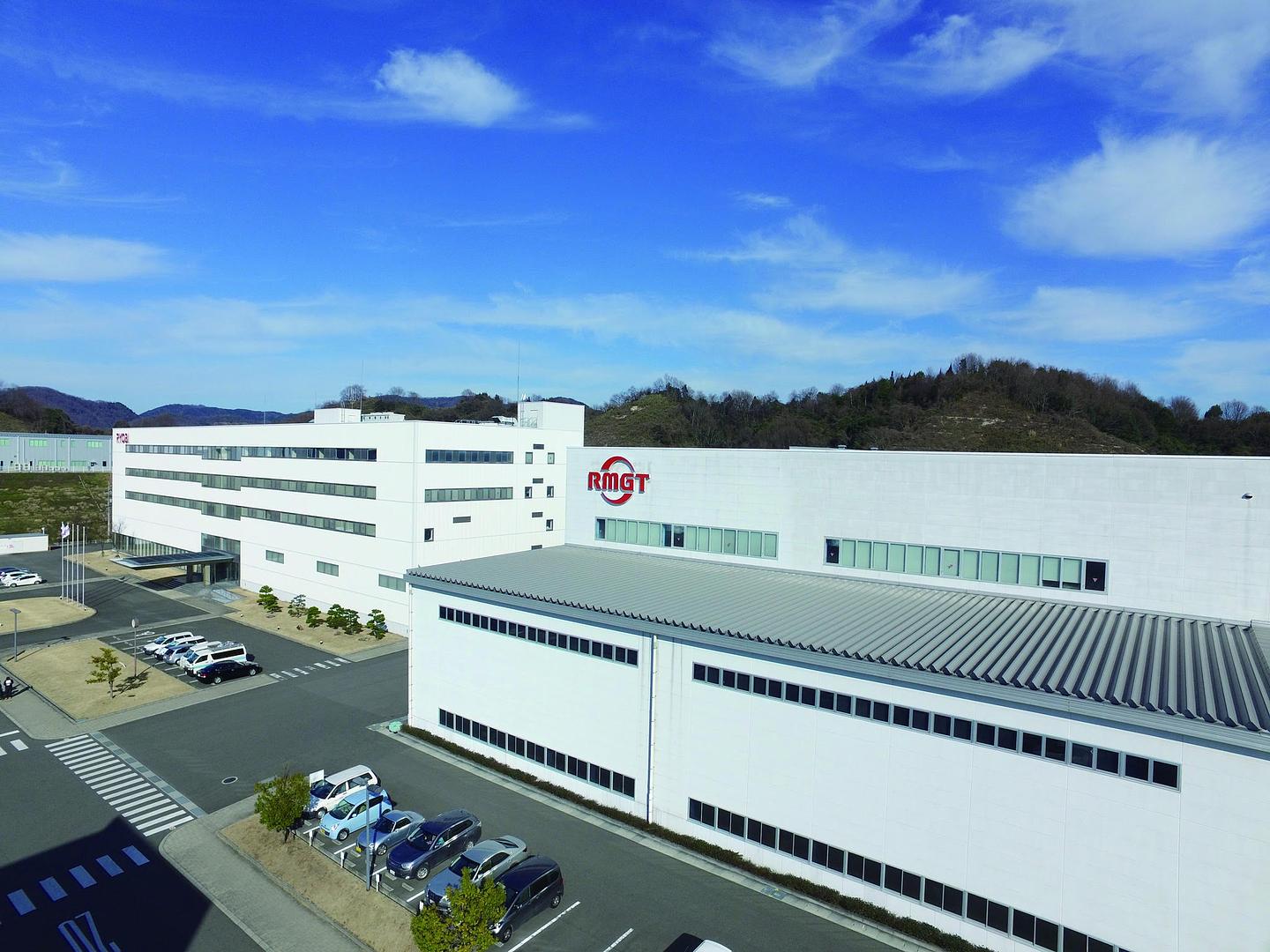
In 1943, in Hiroshima, Japan, at the height of the war, a company was founded specifically to supply die-cast products. This technology is typically used for aluminum or magnesium, metals that are forced under enormous pressure into a steel mold. The process is extremely fast compared to traditional sand casting methods, but it is limited to non-ferrous metals. Consider, for example, the transmission cover of your car. Ryobi is that chosen company, and in 1961, it entered the photocopy printer industry. Photocopy machines were very popular in the 1960s. A.B. Dick, Gestetner, Davidson, and Multigraph held the largest market share. However, demand outstrips supply, especially if the product being sold has a price advantage. Japan was cheaper in the 1960s, and both Ryobi and its competitor Hamada produced thousands of small printers each year. But rather than remain in the low-end market, Ryobi expanded rapidly and quickly became known for its now-famous power tools and a variety of unusual items, such as door closers, portable cameras, and fishing tackle. There were obstacles along the way in establishing its reputation in the mid-size printing press sector, but Ryobi persevered. Between 1989 and 2001, Ryobi licensed the two-color, 52x72 cm Rapida 72K for the Asian market (Koenig & Bauer). The 2000s saw the arrival of a series of new models with a high degree of automation. One such press was the 520 series, closely followed by the bestselling 750, which offered a 50x70 sheet format, so much so that Ryobi even dared to find a market for a 70x100 press, the 1050. Perhaps the most significant innovation was in sheet drying via LED-UV curing (2008). Ryobi was the first to develop the use of low-energy LEDs in collaboration with the giant Panasonic. Initially slow to take hold, LED-UV technology has taken the printing industry by storm, with all major dryer manufacturers making similar energy-efficient systems. Using very little energy and eliminating the heat associated with traditional UV, LED technology changed the face of printing. The technology continued to evolve with a new partner, the British company GEW, which now supplies the majority of the equipment. MHI's printing division, tired of traditional printing, turned to Ryobi as an ideal partner. On January 1, 2014, an agreement was reached to create a joint venture in which Ryobi would hold a 60% stake and MHI a 40% stake. The new entity would be called Ryobi Mitsubishi Graphic Technology Ltd., now known as RMGT. As it turned out, this partnership yielded excellent results in both the American and European markets. Graphic Systems North America (GSNA) was the agency's new name for the American market, and it was enjoying particular success with another unusually sized press, the RMGT 920. The 9 series was an eight-color 64x90 (the European 64x88) press, reintroducing a sheet size last seen on American presses in the 1950s. Both Heidelberg (SORD) and Miller (TP36) kept this format alive elsewhere, but in the United States, the 28x40 inch format was all the rage. Because of its slightly smaller size, RMGT found it had a price advantage over the traditional 70x100 (40 inch) format. RMGT reasoned that as long as printers were producing primarily commercial work, there was no need for a 70x100 format. The RMGT 9 proved so successful that even Komori and Heidelberg now produce the same format. The 2014 merger allowed MHI to focus on larger projects and Ryobi to add existing Mitsubishi platforms, such as the tandem perfector, to its portfolio. However, the time MHI wasted in making a decision and then getting the new joint venture off the ground created a vacuum that other companies, particularly Komori, exploited. The opaque handling of MHI's closure confused many of its loyal customers, likely also due to comments from competitors. The industry wanted to know: "Mitsubishi, are you staying or are you going?" For such a well-organized conglomerate, how could there be such a lack of transparency in communicating the situation and future plans? If a clear message couldn't be conveyed, both parties would have had to accelerate the joint venture while operating in complete secrecy.
Between 1983 and 2012, Mitsubishi sold a large number of printing presses, thus gaining the loyalty of numerous printers. We sold a large number of models to loyal customers. In some regions, such as South Korea and northern China, Mitsubishi was a leading brand, not to mention Japan, where its MHI division held an estimated 45% market share. Perhaps it had something to do with its sales approach: especially in developed countries, Mitsubishi's initial sales strategy was based on price. A common Japanese marketing tool is to buy market share and then... raise prices as the user base grows. Particularly in America, Mitsubishi never seemed to fully understand the quality of its printing presses and the loyalty of its customers. Had it shown greater interest and hired the right staff, as it finally did, the results could have been very different, and MHI would not have lost interest. The 3F Series and the subsequent Diamond 3000 Series were excellent presses with low operating costs, capable of competing with anyone in terms of speed and quality. As the mouse in this alliance, Ryobi, with total corporate revenues across all its entities of $2.25 billion, seems tiny compared to its giant partner, MHI. RMGT, being the youngest in the game, is now dominated by the "Big Three": Heidelberg, Komori and Koenig & Bauer, which may not be a bad thing. With over 30 printing presses sold on the Italian market alone, these pioneers dared to offer unconventional choices, showcasing the quality and rewarding reliability of the RMGT 7/9/10 series product.
The author is a printing historian, consultant, and certified industrial equipment expert.
By Nick Howard
_____________________________________________________________________
Year 2025: Offset Manufacturers' Market Capitalization and Revenue
Koenig & Bauer (KBA)
Market Capitalization: € 150-160 million.
Total Global Revenue: € 1,302 million.
Heidelberger Druckmaschinen
Market Capitalization: € 476 million.
Total Global Revenue: € 2,400 million.
Komori Corporation
Market Capitalization: € 407 million.
Total Global Revenue: € 650 million.
Ryobi Limited
Market Capitalization: € 450 million.
Total Global Revenue: € 1,850 million.
_____________________________________________________________________
Mitsubishi Heavy Industries (MHI), market capitalization of approximately 67 billion euros.